HOW IT WORKS
Coil, magnet, cone
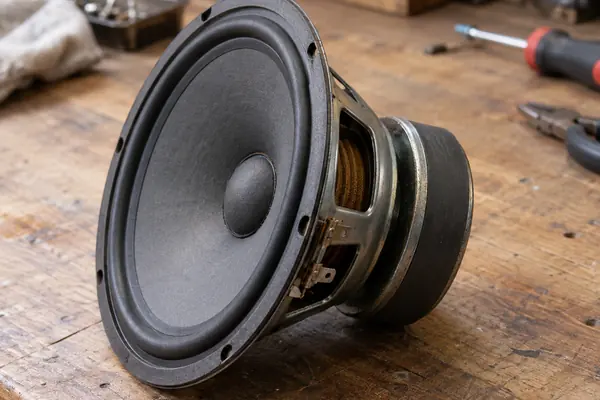
An alternating current in the voice coil makes it attract and repel the permanent magnet, so the coil vibrates and drives the cone that pushes the air.
Inside a speaker linuxspeakers.
HOW SPEAKERS WORK
Every loudspeaker is a small electric motor pushing air.
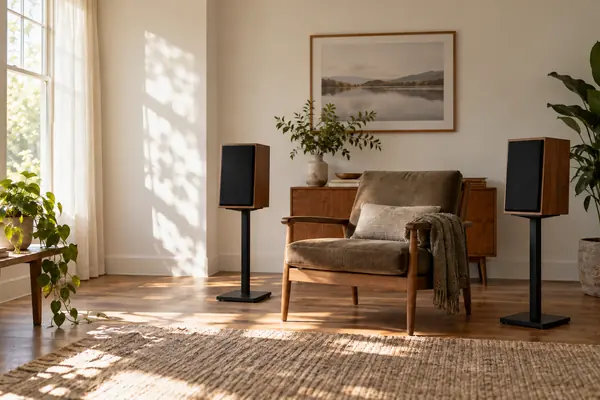
A coil of wire sits inside a magnet and drives a cone back and forth, thousands of times a second. Where you put the pair matters as much as what is inside: the European Broadcasting Union describes a simple layout for its listening rooms that works at home too.
Check the layout Read the short answer
THE SHORT ANSWER
The physics is the same in every speaker.
The room layout is up to you.
HOW IT WORKS
An alternating current in the voice coil makes it attract and repel the permanent magnet, so the coil vibrates and drives the cone that pushes the air.
Inside a speakerTHE LAYOUT
The EBU layout puts the pair 2 to 4 metres apart at a 60 degree angle from the listener, who sits about 0.9 times that gap away.
Check the layoutTHE ROOM
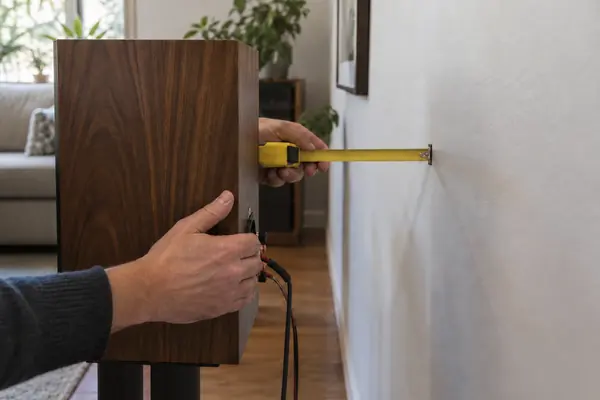
Free-standing speakers should be at least 1 metre from the walls, with their centres at least 1.2 metres up, about seated ear height.
Set it upA QUICK LAYOUT CHECK
Pick a measurement to see what the European Broadcasting Union's listening-room guidance says. The bar gives a rough sense of the scale involved.
These figures describe reference rooms for judging sound quality. In an ordinary living room, treat them as a starting point rather than a rule.
TWO NUMBERS WORTH KNOWING
One figure on the layout,
one on how little power becomes sound.
STEREO ANGLE · EBU
Optimal angle between the two speakers
60°
Seen from the listening position, the two speakers sit 60 degrees apart, with the listener about 0.9 times the speaker gap away.
EFFICIENCY · MIT COURSE NOTES
Share of electrical power that becomes sound
0.5–2%
Loudspeakers are very inefficient. Most of the energy is lost as heat from the voice coil and the circuits, including the crossover.
That is why speakers need an amplifier: the original signal is too weak to move the cone audibly, so the amplifier produces a copy with the same frequency but a much larger amplitude.
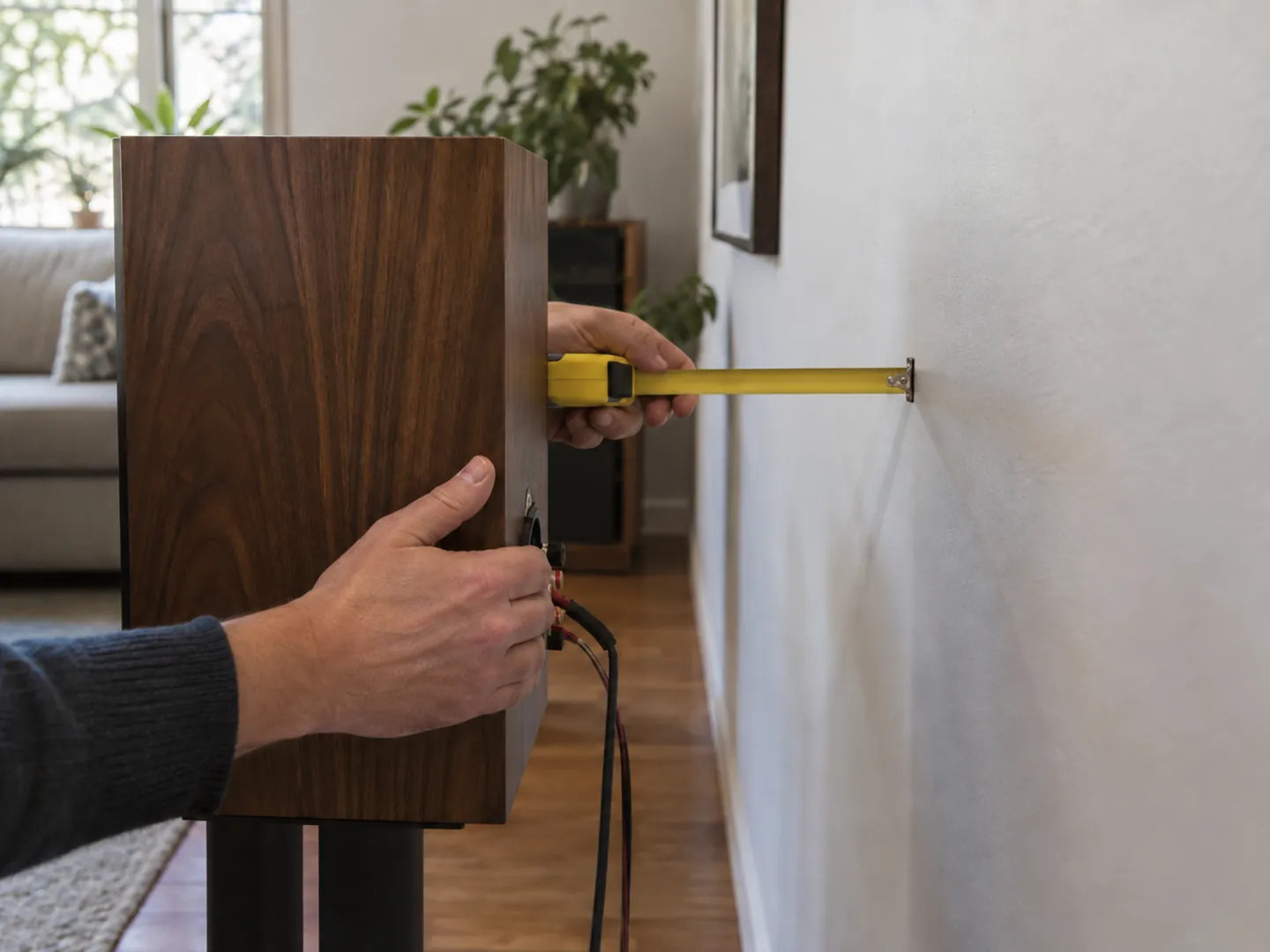
FOUR STEPS FOR A STEREO PAIR
These steps follow the EBU listening-room layout, scaled for a home. You need a tape measure and a little floor space.
INSIDE A SPEAKER
A typical driver has a magnet structure, a voice coil, a spider that carries the coil's movement, a cone that pushes the air, a basket that holds it all together and a dust cap. Cones range from about 1.5 to 18 inches across.
The signal's frequency sets how fast the cone moves, and so the pitch; its amplitude sets how hard the cone pushes, and so the volume. Our ears are most sensitive between about 1 and 4 kHz and less sensitive at high and low frequencies.
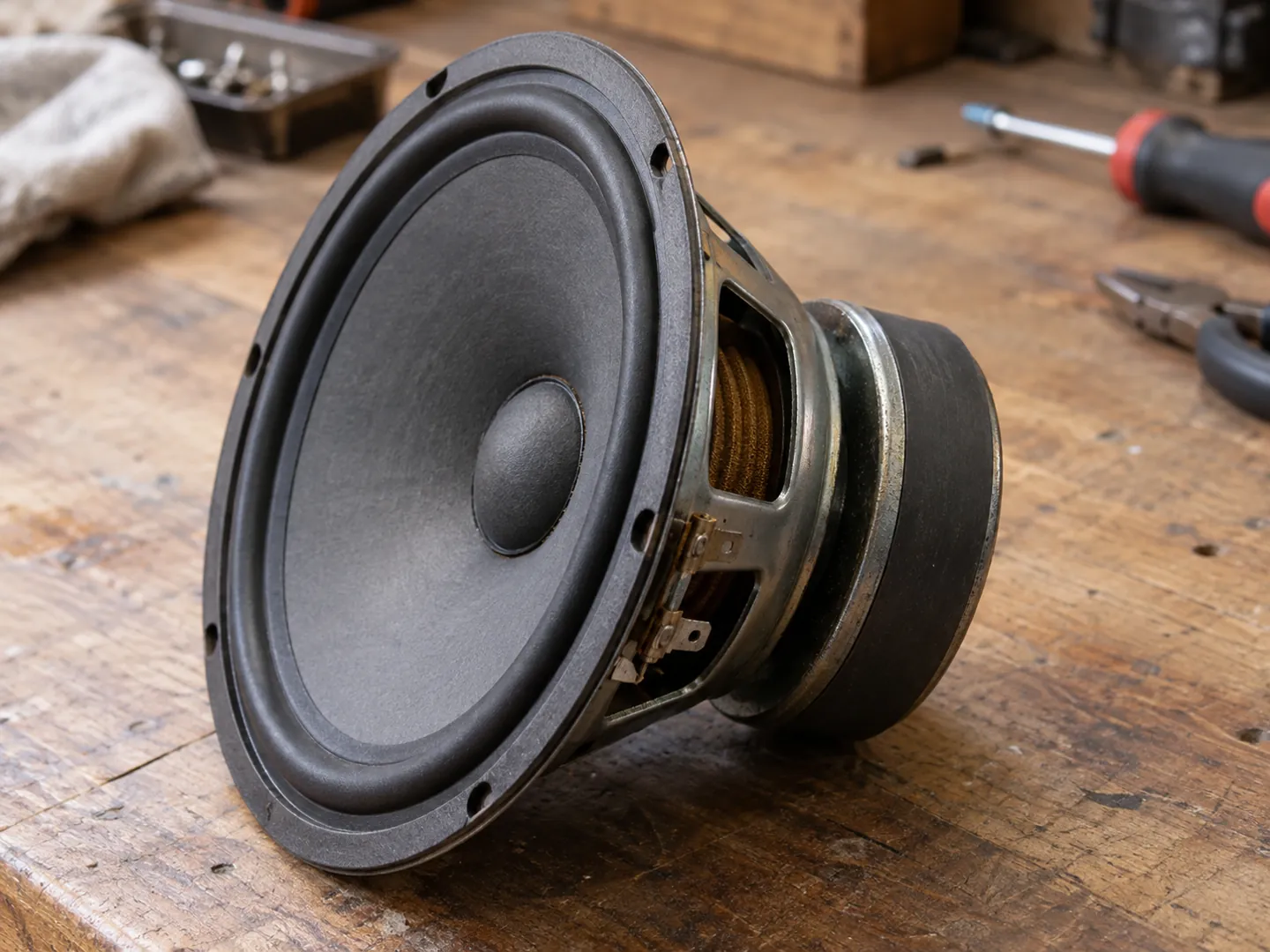
QUESTIONS PEOPLE ASK
An alternating current flows through a coil attached to a cone. The coil is alternately attracted to and repelled by a permanent magnet, so it vibrates, and the cone pushes the air into sound waves.
The signal from a source is too weak to move the cone audibly. An amplifier produces a copy of the signal with the same frequency but much larger amplitude.
The EBU listening-room guidance gives a gap of between 2 and 4 metres, with the listener about 0.9 times that distance away so the speakers sit 60 degrees apart.
Speakers turn only about 0.5 to 2 percent of the power they use into sound. Most of the rest is lost as heat from the voice coil and the circuits.
Yes. Multichannel layouts with and without a picture are set out in ITU-R Recommendation BS.775; the version in force, BS.775-4, was approved in December 2022.
SOURCES
Each figure on this page comes from the sources below. Check them for the full detail and context.